Left-Handed Scissors, Explained.
What this page covers
A guide from HIDARI. We run a specialty store for left-handed tools in Gifu, Japan, and scissors are the tools our customers ask about most. This page explains what actually makes a pair of scissors left-handed, and helps you find the right pair for the job — kitchen, desk, sewing box, or garden shed.
Left-handed vs. right-handed scissors: what's actually different?
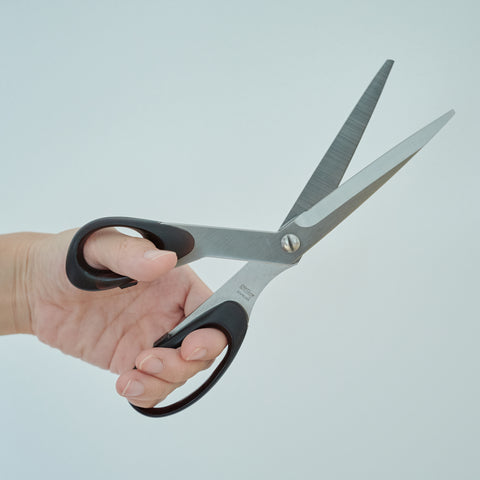
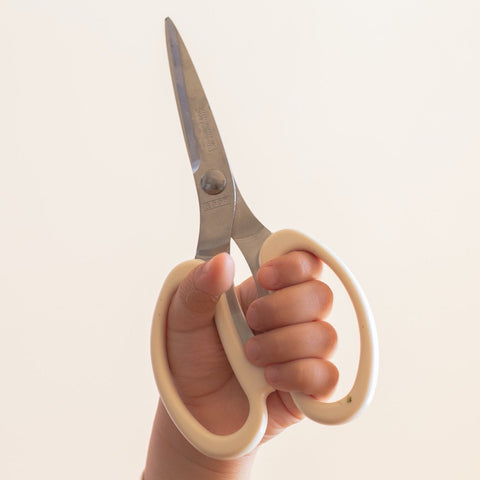
The difference is one of assembly: which blade sits on top. On right-handed scissors, the right blade crosses over the left. On left-handed scissors, it's reversed. That single change decides two things.
Force. When you cut, your thumb and fingers naturally push the handles slightly sideways as they close. In the matching hand, that pressure presses the blades together, and the cut is clean. In the opposite hand, the same pressure pushes the blades apart — paper folds and slips between them, fabric chews instead of shearing. It isn't a matter of technique. The scissors are working against your hand.
Sight. With the blades assembled for your hand, the top blade sits clear of the cutting line, so you can see exactly where the edges will meet. In the opposite hand, the top blade hides the line. You lean over the scissors, or you guess.
One thing handles can't tell you: handedness lives in the blades, not the grips. Scissors sold as "ambidextrous" usually have symmetrical handles that fit either hand comfortably — but if the blades are assembled right-handed, they cut right-handed. Comfortable to hold and correct to cut with are two different things. Every pair we carry has the blades reversed, from the start.
Curious about the mechanics in more detail? We wrote a full article on [the differences between left-handed and right-handed scissors].
Do you really need left-handed scissors?
For most left-handers, scissors are where a left-handed tool makes the most noticeable difference. Knives are a matter of degree — most Japanese double-bevel blades are ground with a right-handed bias, and left-handers work around it. Scissors aren't a matter of degree: they're built around which blade crosses on top, and that can't be neutral. There is no truly two-handed pair of scissors.
That said, we won't tell you that every left-hander needs to switch. Many left-handers have used right-handed scissors all their lives and developed their own workarounds — twisting the wrist, pressing the thumb outward, tilting the paper. If that's you, your technique is real, and it works. Be aware, though, that the workaround itself is the cost: your hand is doing extra work on every cut to hold the blades together.
Two honest notes before you decide.
If you've spent decades on right-handed scissors, a left-handed pair can feel strange for the first few days — your hand has learned to compensate, and now it doesn't need to. That adjustment period is normal, and short.
And if you're buying for a left-handed child who hasn't yet learned those workarounds, the case is simpler: starting with the correct tool means never needing them.
Choose by use.
The simplest way to choose scissors is by what you cut. Paper, food, fabric, stems, hair — each asks something different of a blade, and a pair built for one job will always beat a pair built for none. The six categories below cover everything we carry. All are adult-sized unless marked for kids — if you've been searching for left-handed scissors that aren't school scissors, you're in the right place.
Left-handed kitchen scissors
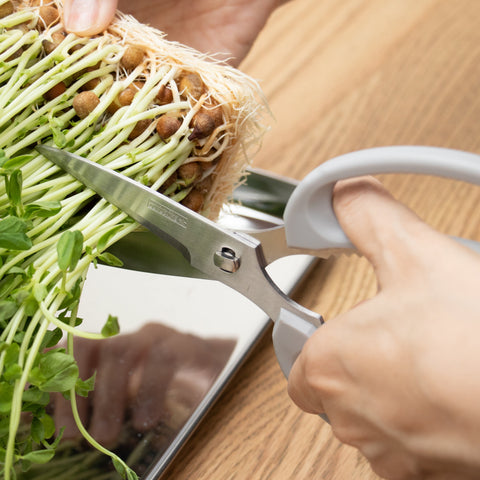
Kitchen scissors do rough work: cutting meat and herbs, opening packages, breaking down boxes. The left-handed question matters here more than most places, because kitchen cutting is often done quickly, one-handed, on slippery things — exactly when blades that push apart become frustrating. The other question worth asking is hygiene: if you'll cut raw meat, choose a pair that comes apart for cleaning.Left-handed everyday & stationery scissors
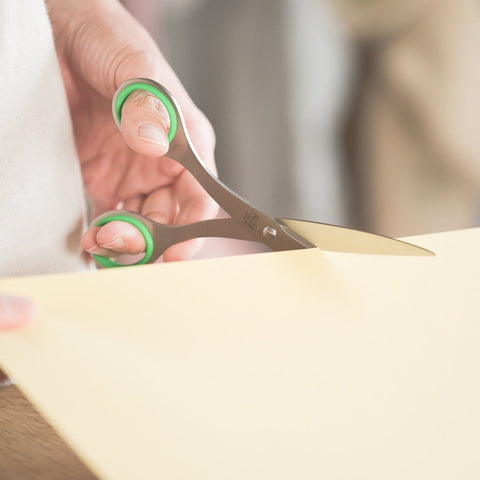
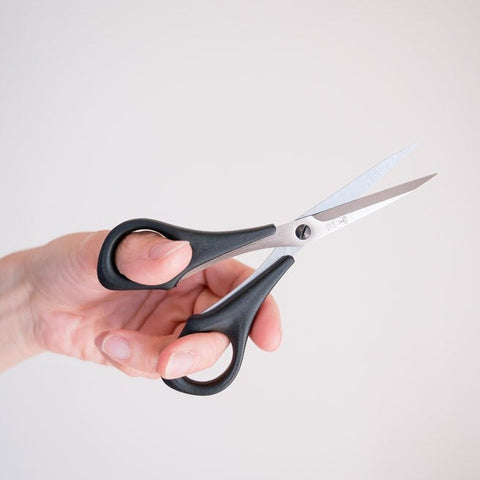
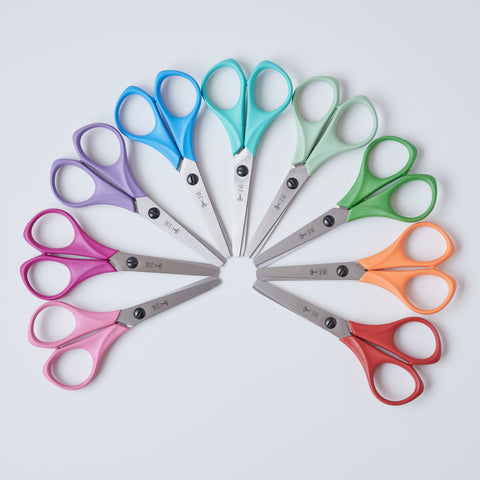
This is the pair that lives in the desk drawer or the kitchen junk drawer — the one that opens mail, cuts wrapping paper, trims documents, and gets borrowed by everyone in the house. Because it's the pair you use most often without thinking, it's also where the left-handed difference quietly pays off every day: the cut follows your line of sight, and the blades stay closed under your natural grip.Left-handed sewing & fabric scissors
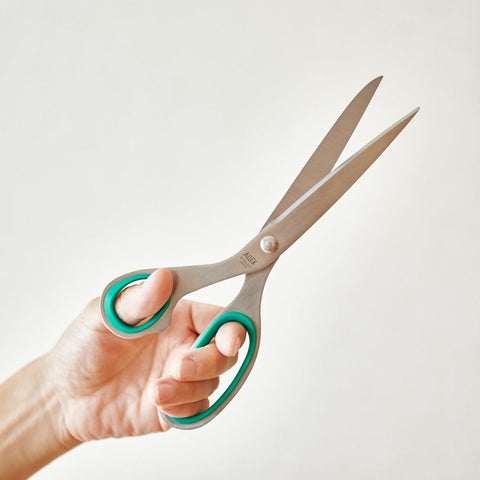
Fabric asks more of scissors than paper does. A long, smooth cut through cloth needs blades that stay pressed together along their full length — any gap, and the fabric folds into it and chews instead of shearing. This is exactly the gap that opens up when a left hand uses right-handed scissors, which is why sewing is where many left-handers first feel the difference. Two rules of thumb for this category: match the blade length to the work — long blades for long cuts through yardage, short for snips and seams — and keep your fabric scissors away from paper, which dulls the edge faster than cloth ever will.Left-handed grooming scissors
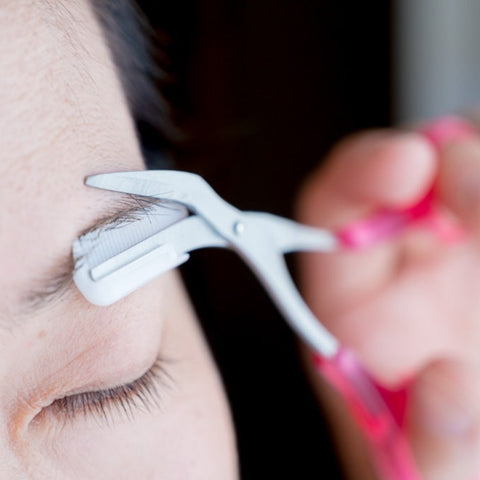
Grooming is where the sight problem from earlier on this page stops being an inconvenience and starts being a safety issue. Trimming eyebrows or stray hairs means cutting close to your face, guided by a mirror — and with right-handed scissors in a left hand, the top blade sits exactly where you need to see. You end up guessing at the last few millimeters, next to your eye. A left-handed pair puts the blade tips in clear view, so you cut precisely where you intend to, and nowhere else.Left-handed flower & garden scissors
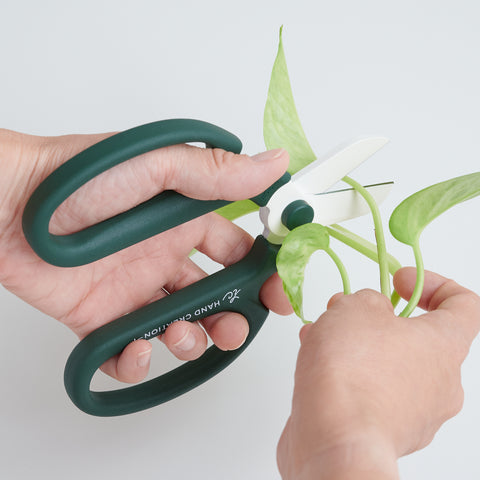
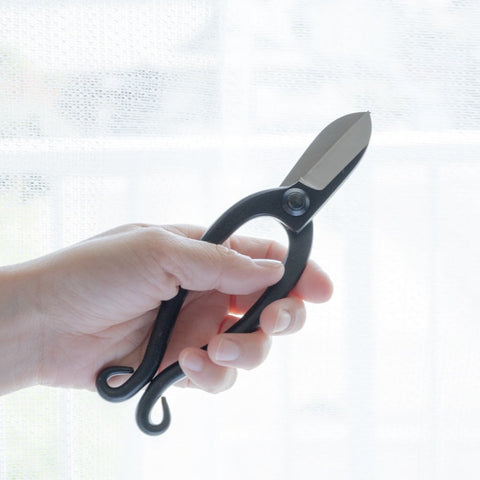
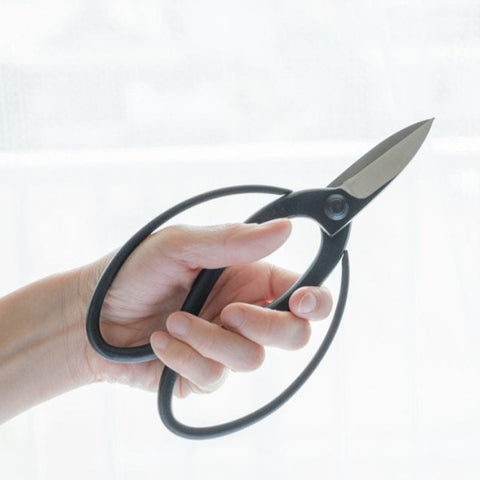
Stems fight back in a way paper never does. Cutting a rose stem or a young branch takes real force through the full grip — and that's exactly the motion where reversed blades work best for a left hand, because the harder you squeeze, the tighter the blades press together. In the wrong hand, the same squeeze widens the gap and the stem crushes instead of cutting cleanly — bad for your hand, worse for the flower, since a crushed stem takes up water poorly. All three pairs below come from Sakagen, who have been making flower and garden scissors since 1903 in Sanjo, Niigata — another of Japan's metalworking towns, a long way north of us.Left-handed scissors for kids
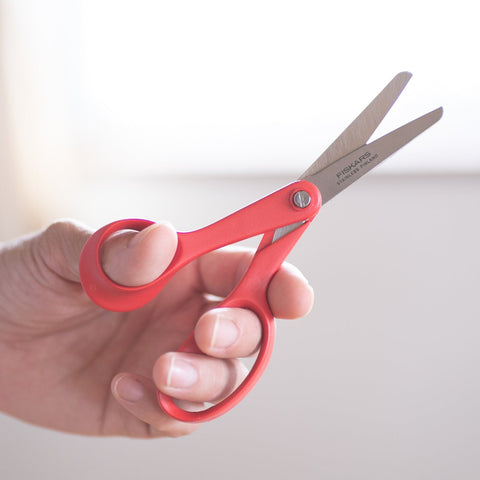
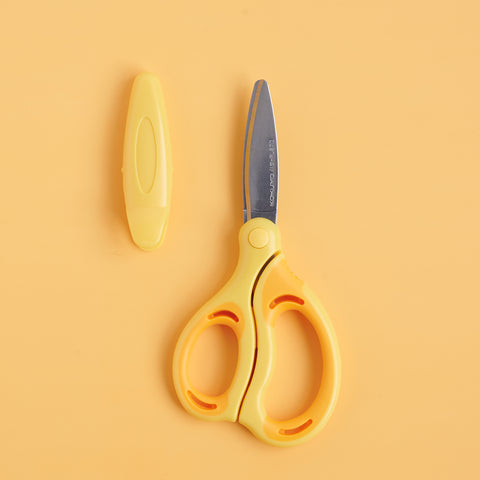
This is the one place on this page where we drop the "you don't have to switch" caution. An adult left-hander has years of workarounds built up; a child has none, and is about to learn to cut for the first time. Give a left-handed child right-handed scissors and what they learn is that cutting is hard and they're bad at it — when the tool was fighting them from the first snip. Fiskars is the standard first pair: rounded tips, light action, a grip shaped for small hands. Paul cuts a little finer, for children past their first snips. Kokuyo is the everyday school pair. The Suncraft is for the kitchen rather than the craft table — serrated blades that grip food, sized and covered for children. If you only buy one, start with the Fiskars.
More than one pair
Most people come to this page looking for a single pair. If you're buying for someone else, or setting up a home from scratch, the Scissors Selection gathers left-handed pairs made in Japan into one box. It works as a gift for a left-handed friend, as a housewarming present, or for anyone who would rather settle the kitchen, the desk and the sewing box at once.
Common questions.
The blades are assembled the other way around — the left blade crosses on top instead of the right. That keeps the blades pressed together under a left-handed grip, and keeps the cutting line in view. The section above explains why both matter.
Many do. Most left-handers have worked out their own compensations — twisting the wrist, pushing the thumb outward, tilting the paper — and those techniques are real. The cost is that your hand does that extra work on every cut.
"Ambidextrous" almost always describes the handles: symmetrical grips that sit comfortably in either hand. The blades underneath are usually still assembled right-handed, so they still cut right-handed. Handedness lives in the blades, not the grips.
Yes. An adult has years of compensations built up; a child is learning to cut for the first time, and the wrong pair teaches them that cutting is difficult. Look for rounded tips and a handle sized for small fingers.
Better not. Paper dulls an edge faster than cloth does, and fabric shears rely on a clean edge along the full blade length. Keep a separate pair for paper, and your fabric scissors will stay sharp for years.
Wipe the blades dry after use — particularly after food, or after plant sap, which corrodes steel if left on. Only put scissors in a dishwasher if the product page says they're dishwasher-safe. For sharpening, find someone who understands that the geometry is reversed: a sharpener who works the standard side will grind away exactly what makes the pair left-handed.
For orders to the United States, import duties are included at checkout — you pay once, and there are no additional fees on delivery. For all other destinations, customs duties and import taxes are not included, and may be charged by your local customs office when the parcel arrives. These charges vary by country and are the customer's responsibility.
Yes, to every country we serve. Unlike kitchen knives, which several countries restrict at the border, scissors have no such limits — wherever you are, we can send them. Delivery from Japan takes 1-3 weeks, and you'll receive tracking when the parcel leaves us.
About HIDARI.
HIDARI is a specialty store for left-handed tools, run by a husband-and-wife team in Kakamigahara, Gifu — about half an hour from Seki by car. Aya, who's left-handed, runs the shop and chooses what we carry. Shingo, a copywriter by trade, handles the writing and the business side. We've been doing this since 2018.
We carry around two hundred items here, roughly seventy percent sourced from makers across Japan and thirty percent designed and produced by us. The scissors sit mostly on the sourced side. We've worked with makers like Suncraft, Allex, and Sakagen for years — long enough to know how each pair is made, and to feel responsible for how we write about them.
We run mostly online, but we also keep a small physical shop in Kakamigahara — open only a few days each month. It's about two and a half hours from Tokyo by shinkansen and local train, so it's not a casual stop. But for anyone who can make the trip on an open day, every tool we carry is there to pick up and hold.
We're a specialty store in a specialty city. We don't carry everything — but what we carry, we've chosen carefully, for left-handers who want to be treated as customers rather than special cases.